
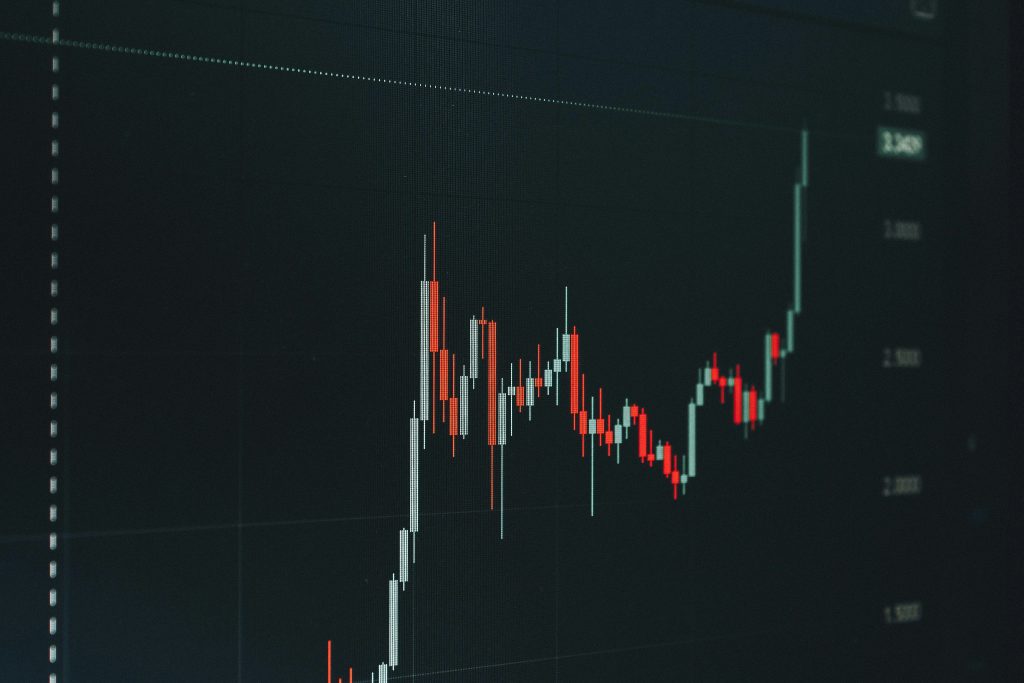
Forex trading with a mere $100 demands precision, discipline, and a strategic framework that balances opportunity with capital preservation. The foreign exchange market, with its $6 trillion daily volume and 24/5 accessibility, offers unparalleled potential—even for micro-investors. This expert-level guide dissects how to initiate and scale a $100 forex account using high-probability tactics and low-to-medium competition principles.
The foundation begins with broker selection. A trader must prioritize regulated entities (e.g., NFA, FCA) offering micro accounts with minimum deposits below $100 and spreads under 1 pip on majors like EUR/USD. Leverage options (1:50 to 1:200) are critical, as they amplify the $100 into a functional trading base—though excessive leverage risks margin calls. Platforms like MetaTrader 4, with robust charting and EA compatibility, are non-negotiable for technical execution.
Funding the account activates the process. With $100 deposited, the trader operates in micro-lots (0.01), where 1 pip equals $0.10 on EUR/USD. This granularity allows precise risk allocation. The expert trader immediately establishes a risk-to-reward ratio (e.g., 1:2) and caps exposure at 1% per trade ($1), leveraging demo accounts to backtest setups like breakout or mean-reversion strategies.
If you’re looking for the best platforms to start investing, check out our guide
Education underpins success. Beyond rudimentary pips and spreads, the trader masters advanced concepts: intermarket correlations (e.g., USD vs. gold), central bank policies affecting volatility, and the impact of economic releases like NFP. Resources like DailyFX and proprietary broker webinars provide real-time insights. Technical proficiency—reading candlestick patterns, Fibonacci retracements, and RSI divergence—sharpens edge over retail noise.
Execution hinges on a defined system. Trading EUR/USD or USD/JPY, the expert uses a 1-hour chart to identify high-probability setups (e.g., double bottoms near key support). A sample trade: buying 0.02 lots at 1.0850, stop-loss at 1.0820 (30 pips, $0.60 risk), targeting 1.0910 (60 pips, $1.20 reward). Position sizing ensures the $100 withstands drawdowns, while compounding small gains accelerates growth.
Losses are data points. A blown trade sans stop-loss might cost $6 (6% of capital), reinforcing the need for automated exits. Over 30 days, a 2% daily gain (compounded) could lift $100 to $180—achievable with a 60% win rate and 1:2 RR. Scaling requires reinvestment, not overleveraging.
Starting forex with $100 is viable through micro-trading, risk discipline, and technical mastery. The market rewards consistency over speculation.
Amazon Book Suggestion:
“Technical Analysis of the Financial Markets” by John J. Murphy
A must-read for advanced traders, this book dives deep into technical tools perfect for forex analysis.