
Introduction: Why Hedge Funds Don’t Want You to Know About Market Depth
Hedge funds have long guarded their edge using tools like Market Depth (DOM), a real-time order book that reveals supply and demand dynamics. But with TradingView’s DOM feature now accessible to retail traders, you can decode the same liquidity patterns and order flow tactics institutions use to manipulate markets.
This guide teaches you to:
- Identify hidden support/resistance levels using bid-ask imbalances.
- Detect spoofing traps (fake orders) to avoid manipulation.
- Execute trades aligned with hedge fund strategies like liquidity hunting and scalping.
Section 1: Market Depth 101 – The Order Book Decoded
What Is Market Depth?
Market Depth displays all active buy (bids) and sell (asks) orders at different price levels. Unlike candlestick charts, it shows real-time liquidity, helping traders anticipate breakouts or reversals.
Why Hedge Funds Rely on DOM:
- Liquidity Mapping: Identify zones with dense orders for large trades without slippage.
- Sentiment Analysis: Spot clusters of buy/sell orders to predict price movements.
- Spoof Detection: Recognize fake orders designed to trick retail traders.
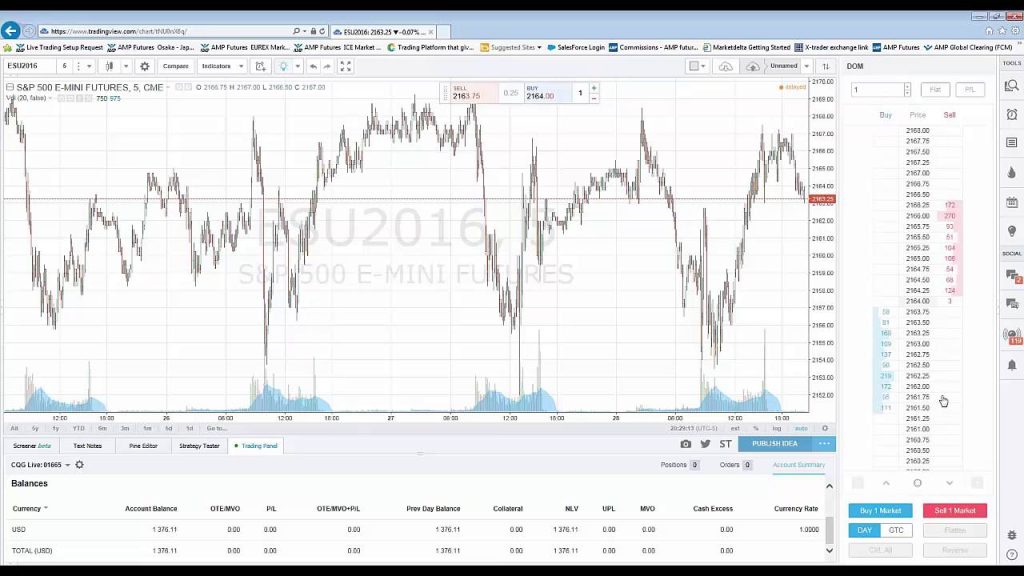
Section 2: Setting Up TradingView’s Market Depth – A Visual Walkthrough
Step 1: Accessing DOM
- Open TradingView > Select Asset > Click “Trade” > Choose “DOM” tab.
- Customize settings like color schemes and volume thresholds.
Pro Tip: Pair DOM with Volume Profile or VWAP for layered analysis.
Section 3: 3 Hedge Fund Strategies to Steal Using Market Depth
Strategy 1: Liquidity Hunting (The “Iceberg” Technique)
Hedge funds split large orders into smaller chunks to avoid detection. Use DOM to spot repeated orders at key levels (e.g., 100 BTC bids every $1K).
Strategy 2: Order Book Imbalance Scalping
Exploit short-term breakouts when bids dwarf asks (e.g., 10,000 ETH bids vs. 2,000 asks). Confirm with RSI/MACD to filter noise.
Strategy 3: Spoofing Trap Reversal
Identify fake orders that vanish as price approaches. Fade the move—e.g., go long if spoofed asks disappear.
Section 4: Risk Management – Protect Your Capital
- Size Positions Wisely: Never risk >2% per trade. DOM liquidity can vanish during volatility.
- Backtest Relentlessly: Use TradingView’s replay mode to validate strategies.
Section 5: Case Studies – Market Depth in Action
- GameStop (GME) Short Squeeze: DOM showed collapsing bid walls as retail buyers overwhelmed institutional shorts.
- **Bitcoin’s 60KBreakout:∗∗Cumulativebidsat60KBreakout:∗∗Cumulativebidsat58K hinted at whale accumulation days before the surge.
Section 6: Common Mistakes to Avoid
- Ignoring Macro Context: Pair DOM with Fed announcements or earnings calendars.
- Overreacting to Thin Markets: Avoid trading during low-liquidity hours.
Conclusion: Trading Like the 1%
Hedge fund replication isn’t about copying trades—it’s about understanding market microstructure. By mastering DOM, you gain a rare edge in today’s democratized markets.
Recommended Books for Further Learning
- “Inside the House of Money” by Steven Drobny
Explores global macro strategies from top hedge fund traders. - “The Handbook of Alternative Assets” by Mark J.P. Anson
Covers hedge fund strategies, risk management, and replication techniques. - “Hedge Funds For Dummies” by Ann C. Logue
A beginner-friendly guide to hedge fund mechanics and terminology. - “All About Hedge Funds” by Robert A. Jaeger
Breaks down hedge fund structures, strategies, and historical performance.
References & Citations
- Hedge Fund Books
StreetOfWalls – Hedge Fund Training - TradingView’s DOM Guide
Depth of Market (DOM) – TradingView Support - Hedge Fund Replication Study
Hedge Fund Replication Using Strategy-Specific Factors - LuxAlgo DOM Tool
Depth of Market (DOM) Indicator – TradingView - Hedge Fund Replication Challenges
The Hedge Fund Journal – Replication - TradingView API Documentation
DOM Widget Setup – TradingView - Market Depth Case Studies
LuxAlgo DOM Features - Top Hedge Fund Books
Blinkist – Best Hedge Fund Books