
Let’s be honest: the word “budget” can feel restrictive, complicated, and frankly, a bit boring. Visions of color-coded spreadsheets and endless receipt tracking come to mind. But what if creating a budget was less about restriction and more about empowerment? What if it was the key to reducing financial anxiety, achieving your goals, and finally understanding where your money goes?
This isn’t about deprivation; it’s about clarity. Whether you want to save for a vacation, pay down debt, or simply stop wondering where your paycheck went, it all starts with a simple plan. Here’s your completely straightforward, step-by-step guide to building your first budget.
Step 1: The Foundation – Know Your Numbers (Income vs. Expenses)
You can’t direct your money if you don’t know how much is coming in and going out.
Track Your Monthly Expenses: This is the eye-opener. For one month, track every single dollar you spend. Use your bank statements, credit card apps, or just a notes app on your phone. Don’t judge, just record.
Calculate Your Monthly Take-Home Income: This is your net income—what actually lands in your bank account after taxes, health insurance, and retirement contributions. Include all reliable sources: salary, side hustles, and regular freelance work.
Step 2: Categorize Your Spending – The “Needs vs. Wants” Lens
Now, sort those expenses into categories. This reveals your spending patterns.
- Essentials (Needs): Housing (rent/mortgage), utilities, groceries, transportation (gas, transit pass), minimum debt payments, and basic insurance.
- Lifestyle (Wants): Dining out, entertainment, subscriptions (Netflix, Spotify), hobbies, shopping, and travel.
- Future Goals (Savings & Debt Paydown): This is critical. Emergency fund contributions, retirement savings (beyond any auto-deduction), extra debt payments, and saving for specific goals (like a down payment).
Step 3: Choose Your Budgeting Method – Pick Your Framework
This is where your plan comes to life. Two popular, beginner-friendly methods are:
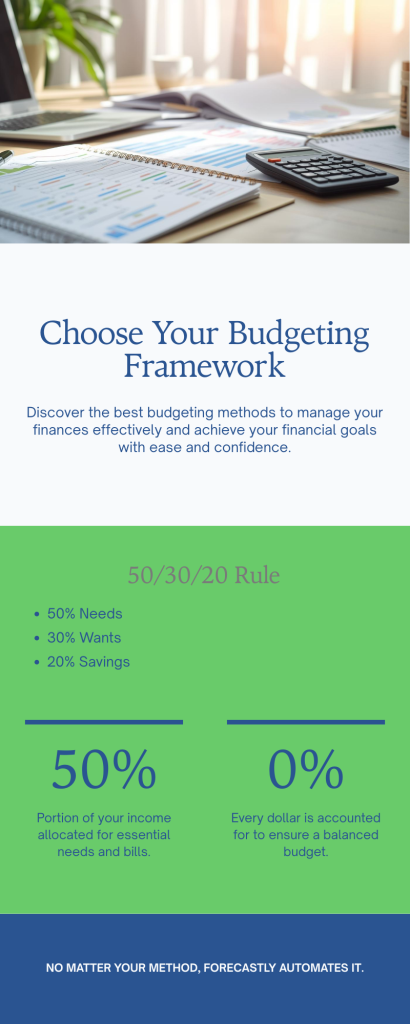
1. The 50/30/20 Rule (Simple & Balanced)
- 50% of your income goes to Needs (Essentials).
- 30% of your income goes to Wants (Lifestyle).
- 20% of your income goes to Savings & Debt Repayment.
This method is fantastic for its simplicity and balance, ensuring you fund your future while enjoying your present.
2. Zero-Based Budget (Detailed & Purposeful)
Here, you give every single dollar a job until your income minus your expenses equals zero. It doesn’t mean you spend it all; it means you allocate it all, including dollars to savings and debt. This method offers maximum control and is excellent for detailed financial goal-setting.
The Modern Shortcut: Automate Your Budget Instantly
Manually tracking, categorizing, and allocating is where most people give up. It’s time-consuming, easy to forget, and frankly, outdated.
Imagine if you could:
- Connect your financial accounts securely.
- Watch as an AI instantly categorizes months of your spending into Needs, Wants, and Savings.
- Get a personalized, optimized budget plan based on the 50/30/20 rule or zero-based method, tailored to your actual spending habits and income.
- Receive proactive alerts when you’re over-spending in a category and insights on how to adjust.
This is exactly what Forecastly does. It automates the entire process outlined above, transforming a hours-long spreadsheet session into a matter of minutes.
Forecastly acts as your personal financial analyst, removing the guesswork and manual hassle. It learns your habits, helps you set realistic goals, and provides a clear, dynamic roadmap for your money.
Your Next Step: Financial Clarity Awaits
You now have the knowledge to build a budget from scratch. But you also have a modern alternative to the manual grind.
Skip the spreadsheets. Let Forecastly build your personalized budget in minutes.
Ready to see your financial picture with instant clarity and build a budget that actually works for your life?
Join the Forecastly waitlist today and be the first to experience effortless, automated budgeting: https://forecastly.online/waitlist