
Introduction: Why Power BI is a Game-Changer for Fintech Startups
Imagine you’re running a fintech startup, juggling customer transactions, market trends, and regulatory demands. Data is pouring in from every direction—bank APIs, payment platforms, customer feedback. How do you make sense of it all without drowning in spreadsheets? Enter Power BI, Microsoft’s powerhouse business analytics tool that transforms raw data into vibrant, actionable insights. For young professionals in the business, financial, or trading world, Power BI is like a trusty sidekick, helping you spot opportunities, dodge risks, and keep your startup agile.
Power BI lets you create interactive dashboards and reports, pulling data from various sources to give you a clear picture of your business. In fintech, where speed, accuracy, and security are non-negotiable, Power BI’s ability to handle large datasets, provide real-time updates, and ensure compliance makes it a standout choice. This guide will walk you through how Power BI integrations can supercharge your fintech startup, with practical tips, real-world examples, and resources to get you started.
Key Features of Power BI for Fintech
Power BI offers a suite of features tailored to the needs of fintech startups. Here’s a breakdown of the ones that matter most:
- Data Connectivity: Power BI connects to a wide range of data sources, from SQL databases to cloud services like Azure. For fintech, this means you can pull in transactional data, customer records, or market feeds without breaking a sweat.
- Real-Time Analytics: In fintech, timing is everything. Power BI’s real-time data streaming lets you monitor transactions or market changes as they happen, so you can act fast.
- Advanced Visualization: With a variety of charts, graphs, and maps, Power BI turns complex financial data into visuals that are easy to understand. Think of it as translating numbers into a story your team can follow.
- Security and Compliance: Handling sensitive financial data? Power BI’s row-level security and compliance with industry standards keep your data safe and your startup on the right side of regulations.
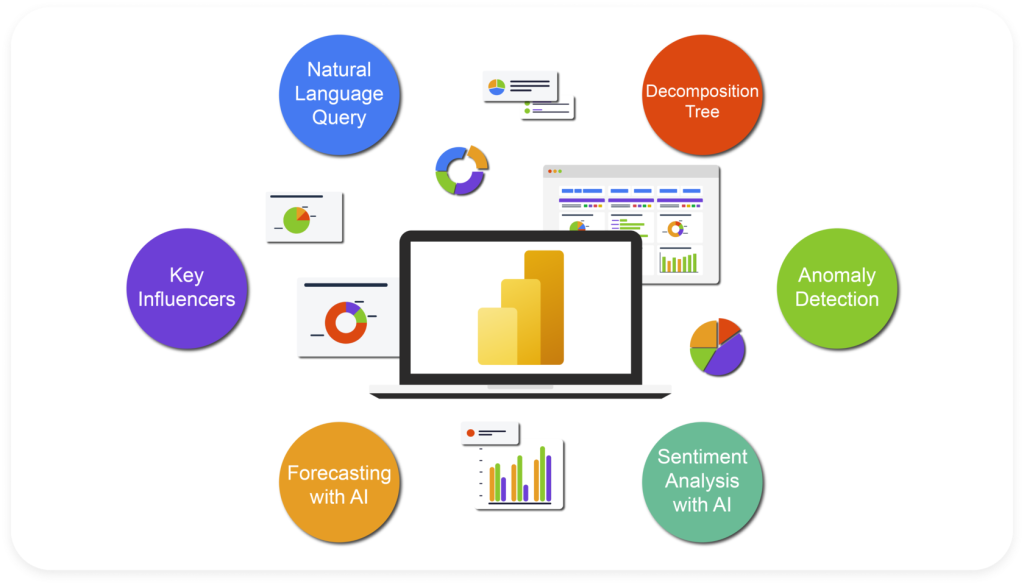
- AI and Machine Learning: Power BI integrates with Azure Machine Learning, enabling predictive analytics for things like credit scoring or fraud detection—perfect for staying ahead in fintech.
These features make Power BI a versatile tool for fintech startups looking to scale smartly and securely.
Integrating Power BI with Fintech Data Sources
Fintech startups rely on diverse data sources, from payment processors to stock market APIs. Power BI’s integration capabilities make it possible to bring all this data together. Here’s how you can connect Power BI to common fintech data sources:
Financial Databases
Most fintech startups store transactional data in databases like SQL Server or Oracle. Power BI has built-in connectors for these, allowing you to import data directly and create reports. For example, you can track daily transactions or analyze customer spending patterns.
Payment Platform APIs
Popular payment platforms like Stripe and PayPal are critical for many fintechs. While Power BI doesn’t have native connectors for these, third-party tools like CData (Stripe Power BI Connector) or Skyvia (Stripe Power BI Integration) make integration seamless. These tools let you pull in data on transactions, refunds, or customer payments to build dashboards that track revenue or monitor payment trends.
Stock Market Data
For fintechs in trading or investment, stock market data is gold. Power BI can connect to financial data APIs through custom connectors, such as those from EODHD APIs (Power BI Connector for Financial Data). This lets you analyze stock prices, volumes, or trends in real time, helping your startup make data-driven investment decisions.
Cloud Services
Many fintechs use cloud platforms like Azure or AWS for data storage. Power BI integrates natively with Azure services, making it easy to pull data from cloud databases or data warehouses. For example, you can connect to an Azure SQL Database to analyze customer demographics or transaction histories.
By combining these data sources, Power BI helps fintech startups create unified dashboards that provide a 360-degree view of their operations.
Use Cases of Power BI in Fintech
Power BI’s versatility shines in its ability to address specific fintech challenges. Here are some key use cases, with examples of how they apply:
Customer Analytics and Segmentation
Understanding your customers is crucial for fintech success. Power BI can analyze data to identify potential customers in specific regions or segment users based on spending habits. For instance, a startup offering digital wallets could use Power BI to see which demographics are adopting their service most, tailoring marketing campaigns accordingly.
Fraud Detection and Prevention
Fraud is a constant threat in fintech. Power BI can detect anomalies in user behavior, such as multiple transactions from the same account in a short time. By setting up alerts, startups can catch suspicious activity early. A Power BI dashboard could visualize transaction patterns, highlighting outliers for further investigation.
Risk Management
Fintechs need to assess risks, whether it’s credit risk for loans or market risk for investments. Power BI’s AI capabilities can build predictive models to forecast risks, helping startups make safer decisions. For example, a lending platform could use Power BI to predict default rates based on customer data.
Performance Tracking and KPI Monitoring
Tracking key performance indicators (KPIs) like revenue growth or customer acquisition is vital for startups. Power BI lets you create dashboards that monitor these metrics in real time. A fintech startup could track quarterly growth or compare performance across regions to identify underperforming markets.
Regulatory Compliance Reporting
Fintechs face strict regulatory requirements. Power BI can generate reports that ensure compliance with financial regulations, such as anti-money laundering (AML) standards. Automated reporting saves time and reduces errors, keeping your startup audit-ready.
These use cases show how Power BI can tackle the unique challenges fintech startups face, from building trust to staying compliant.
Case Studies: Power BI in Action
Real-world examples highlight Power BI’s impact on fintech. Here are two compelling case studies:
Metro Bank: Enhancing Customer Service
Metro Bank, a UK high street bank, uses Power BI to improve the banking experience (Metro Bank Case Study). With over 100 reports in production, the bank tracks KPIs like call center metrics, mobile banking transactions, and customer complaints. Power BI’s visualizations help Metro Bank understand customer needs, optimize staffing, and resolve issues faster. The CEO calls Power BI “a bank in his pocket,” emphasizing its role in decision-making. The bank plans to leverage Power BI’s machine learning for demand forecasting, showing its commitment to staying cutting-edge.
Kenyan Fintech: Streamlining Government Revenue
A Kenya-based fintech, a leader in ICT and fintech solutions since 1999, partnered with Daffodil Software to build a data enrichment and reporting system using Power BI (Daffodil Software Case Study). The system processed government revenue data, such as business permits and parking passes, with features like revenue forecasting, performance monitoring, and access control. Power BI’s automation reduced manual analysis by 30% and data processing efforts by 66%, enabling faster access to low-cost power and water in Kenyan communities. The solution included 45 high-level KPIs across 10-11 pages, showcasing Power BI’s scalability.
These case studies demonstrate how Power BI drives efficiency and innovation in fintech, from customer service to public sector solutions.
Best Practices for Implementing Power BI in Fintech Startups
To get the most out of Power BI, fintech startups should follow these best practices:
- Ensure Data Security and Compliance: Use Power BI’s row-level security and encryption to protect sensitive financial data. Regularly audit access controls to comply with regulations like GDPR or AML.
- Choose the Right Data Sources: Prioritize high-quality, relevant data sources. Validate data accuracy before integrating to avoid misleading insights.
- Design Intuitive Dashboards: Focus on KPIs that matter to your business, like revenue or customer retention. Keep dashboards simple and visually appealing to ensure quick decision-making.
- Train Your Team: Invest in Power BI training for your team. Online courses from Microsoft or books like Power BI for Finance can upskill your staff.
- Maintain and Update Reports: Schedule regular updates to keep reports accurate. Use Power BI’s automation features to refresh data without manual effort.
These practices help fintech startups maximize Power BI’s potential while avoiding common pitfalls.
Challenges and Solutions
Implementing Power BI isn’t without challenges, especially for fintech startups. Here are some common hurdles and how to overcome them:
| Challenge | Description | Solution |
|---|---|---|
| Handling Large Data Volumes | Fintechs deal with massive datasets, which can slow down Power BI. | Use DirectQuery for large datasets or optimize data models to improve performance. |
| Ensuring Data Accuracy | Inaccurate data can lead to wrong decisions in finance. | Implement data validation processes and use Power BI’s data quality tools to clean data. |
| Integrating with Legacy Systems | Older systems may not connect easily with Power BI. | Use middleware or custom connectors to bridge the gap between legacy systems and Power BI. |
By addressing these challenges proactively, startups can ensure a smooth Power BI implementation.
Future Trends in Power BI and Fintech Integrations
Power BI is evolving, and several trends are set to shape its role in fintech:
- AI and Machine Learning: Power BI’s integration with Azure Machine Learning will enhance predictive analytics, enabling fintechs to forecast market trends or detect fraud more accurately.
- Real-Time Analytics: As fintechs demand faster insights, Power BI’s real-time capabilities will become even more critical for monitoring transactions or market changes.
- Enhanced Security: With cyber threats on the rise, Power BI is likely to introduce stronger security features, ensuring fintechs can protect sensitive data.
- Time Intelligence Features: Power BI’s built-in time intelligence tools make it easier to spot trends over time, which is ideal for financial planning and forecasting (Power BI Uses in Finance).
These trends suggest Power BI will remain a vital tool for fintech startups looking to stay competitive.
Recommended Books and Resources
To master Power BI and its applications in fintech, check out these resources:
- Books:
- Power BI for Finance: A Practical Guide to Business Intelligence by Kevin T. Davis: A focused guide on using Power BI for financial analysis.
- Power BI for Finance and Accounting: Unlocking Financial Insights by Kiet Huynh: Covers financial reporting and analytics with Power BI (Amazon Link).
- Mastering Microsoft Power BI by Brett Powell: A comprehensive guide for advanced Power BI techniques (Amazon Link).
- Microsoft Power BI Quick Start Guide by Devin Knight: Perfect for beginners learning Power BI basics.
- Online Resources:
- Microsoft Learn’s Power BI documentation (Connect to Services) offers tutorials on integrations.
- The Power BI Community (Power BI Community) is great for troubleshooting and sharing dashboards.
- Corporate Finance Institute’s Power BI courses (CFI Power BI) focus on financial applications.
These resources will help you build the skills needed to leverage Power BI in your fintech startup.
Conclusion
Power BI is a powerful ally for fintech startups, offering tools to analyze data, uncover insights, and stay compliant in a fast-paced industry. From integrating with payment platforms to detecting fraud, Power BI’s features are tailored to the needs of young professionals in finance. Real-world success stories, like Metro Bank and a Kenyan fintech, show what’s possible when you harness Power BI’s potential. By following best practices and staying ahead of trends, your startup can use Power BI to make smarter decisions and grow faster. Ready to dive in? Grab a book, explore Microsoft’s resources, and start building dashboards that bring your data to life.Show in sidebar
Key Citations
- Daffodil Software – Leveraging Power BI for Fintech
- Microsoft Power BI Blog – Metro Bank Case Study
- HackerNoon – Power BI and Fintech Synergy
- Power BI for Finance and Accounting Book
- Mastering Microsoft Power BI Book
- Microsoft Learn – Power BI Service Connections
- Corporate Finance Institute – Power BI in Finance
- CData Stripe Power BI Connector
- Skyvia Stripe Power BI Integration
- EODHD Power BI Connector for Financial Data
- Corporate Finance Institute Power BI Courses